winph 444 Probability in Casino Games
Mastering Probability in Casino Games with winph 444
Understanding probability is the cornerstone of advanced strategy in casino games. For seasoned players looking to elevate their game, grasping the mathematical underpinnings of each wager is not just an advantage—it's a necessity. At winph 444, we believe in empowering our players in the Philippines market with the knowledge to make informed decisions, whether they are engaging in online betting on slots, live dealer games, or sports. This comprehensive guide delves into the intricate world of probability, house edge, and variance, offering advanced insights to help you navigate the thrilling landscape of casino gaming. From calculating odds to understanding long-term expectations, we'll equip you with the tools to approach every game with a strategic mindset, enhancing your mobile-first gaming experience.
Table of Contents
- The Fundamentals of Probability in Casino Gaming
- Deconstructing House Edge and RTP (Return to Player)
- Understanding Variance and Volatility in Games
- Applying Probability to Popular Casino Games
- Advanced Betting Strategies Based on Probabilistic Analysis
- Dispelling Common Misconceptions and Cognitive Biases
The Fundamentals of Probability in Casino Gaming
At its core, probability in casino games quantifies the likelihood of a specific event occurring. It’s expressed as a number between 0 and 1 (or 0% and 100%), where 0 means impossible and 1 means certain. For advanced players, this isn't just about knowing the odds of a single card being drawn; it's about understanding the cumulative probabilities over multiple rounds and how they influence long-term outcomes. Every spin of the reel, every roll of the dice, and every dealt card is governed by these mathematical principles. Grasping these fundamentals is crucial for developing sophisticated strategies beyond mere luck.
Consider a simple coin toss: the probability of landing heads is 0.5 (50%). In casino games, the calculations become more complex due to multiple variables, but the underlying principle remains. For instance, in Blackjack, the probability of getting a specific card changes with each card dealt. Understanding conditional probability—how the likelihood of an event changes based on previous events—is vital for games where cards are not immediately reshuffled. This deep understanding allows players to make more informed decisions, especially when it comes to hitting, standing, or splitting.
Moreover, the concept of expected value (EV) is paramount. EV is the average outcome of an action if that action were repeated many times. A positive EV indicates a profitable long-term strategy, while a negative EV suggests a losing one. While most casino games inherently have a negative EV for the player due to the house edge, understanding EV helps players identify the best possible bets and manage their bankroll effectively. For those serious about online betting, calculating EV for various scenarios is an indispensable skill.
Deconstructing House Edge and RTP (Return to Player)
The house edge is the casino's built-in advantage, expressed as a percentage of the player's initial bet. It’s the reason why, over an infinite number of plays, the casino will always come out ahead. For example, a game with a 2% house edge means that, on average, the casino expects to keep 2 cents for every peso wagered. Understanding this isn't about avoiding games with a house edge (as all do), but about choosing games with the lowest edge to maximize your playtime and potential returns.
Conversely, Return to Player (RTP) is the theoretical percentage of all wagered money that a slot machine or casino game will pay back to players over time. If a slot game has an RTP of 96%, it means that for every 100 pesos wagered, the game is expected to return 96 pesos to players, with the remaining 4 pesos being the house's profit (a 4% house edge). High RTP games are generally preferred by advanced players as they offer better long-term prospects. At winph 444, we feature games from top providers like JDB Gaming, JILI Games, and Play’n GO, many of which publish their RTP figures, allowing players to make strategic choices.
It's important to differentiate between theoretical RTP and actual short-term results. While RTP is calculated over millions of spins or hands, your personal experience over a few hundred plays can vary wildly due to variance. However, over extended play, the game's RTP will assert itself. Advanced players use RTP and house edge data to select games that offer the best mathematical opportunities, often combining this with optimal strategy to further reduce the effective house edge.
Understanding Variance and Volatility in Games
While probability and house edge tell you about the long-term expected outcome, variance (often referred to as volatility in slots) describes the short-term fluctuations in results. A high-variance game might offer infrequent but large payouts, while a low-variance game provides more frequent but smaller wins. Understanding variance is crucial for bankroll management and for aligning game choice with your risk tolerance.
For example, slot games are often categorized by their volatility. High-volatility slots are ideal for players with larger bankrolls who are comfortable with longer losing streaks in pursuit of a massive jackpot. Low-volatility slots, on the other hand, suit players who prefer more consistent, albeit smaller, wins and want to extend their playtime. In table games like Blackjack, while the house edge is relatively low, the variance can still be significant depending on your strategy and bet sizing.
Advanced players utilize their understanding of variance to adjust their betting strategies. In high-variance situations, they might employ smaller bet sizes to weather potential dry spells, or they might increase their bets during perceived favorable conditions (though this requires careful consideration and is not applicable to all games). Effective bankroll management, tailored to the variance of the chosen game, is a hallmark of a skilled player. This ensures that you can withstand the inevitable swings and remain in the game long enough for probability to play out.
Applying Probability to Popular Casino Games
Let's examine how probabilistic thinking applies to some popular casino games available at winph 444, catering to the Philippines market:
- Blackjack: This is perhaps the quintessential game for applying probability. Basic strategy charts are derived directly from probabilistic calculations, minimizing the house edge to its lowest possible point (often less than 0.5%). Advanced players delve into card counting (though difficult in online settings due to continuous shuffling) and understanding specific hand probabilities to make optimal decisions on hitting, standing, doubling down, and splitting.
- Roulette: While seemingly random, roulette offers clear probability calculations for each type of bet. For example, a single number bet (straight up) has a probability of 1/37 (European) or 1/38 (American) of winning. Understanding these odds helps players choose bets that align with their risk appetite, although the house edge remains constant across most bets. Advanced strategies might involve exploring patterns in results, but ultimately, each spin is an independent event.
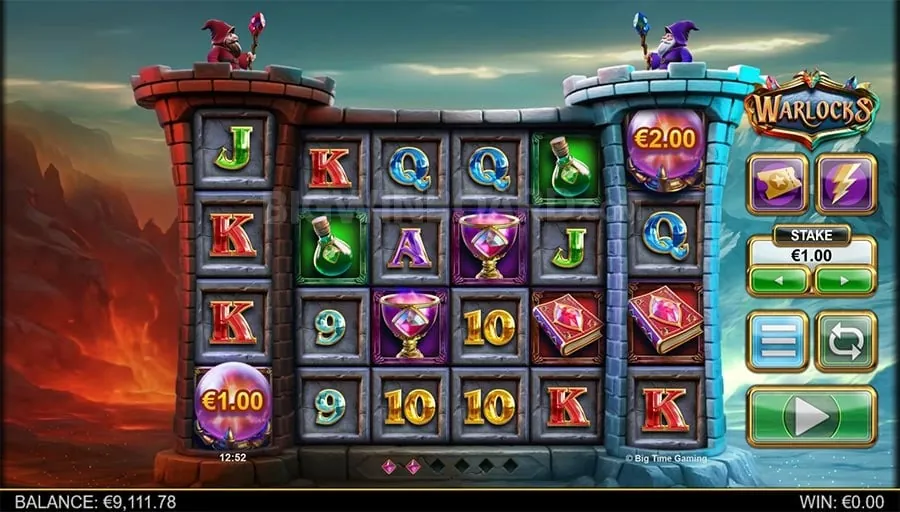
- Slots (JILI Games, Play’n GO): While individual spin probabilities are complex and usually hidden, RTP and volatility are the key probabilistic metrics. Advanced players research slot RTPs and volatility levels to choose games that fit their playing style and bankroll. They understand that while a large jackpot is tempting, the probability of hitting it is extremely low, and smaller, more frequent wins from lower volatility slots might offer a more consistent experience.
- Baccarat: With only three possible outcomes (Player, Banker, Tie), Baccarat has straightforward probabilities. The Banker bet typically has the lowest house edge, making it the statistically preferred option for advanced players, despite the commission. Understanding the probabilities of each hand outcome helps players stick to the most advantageous bets.
By applying these probabilistic insights, players can move beyond mere guessing and make strategically sound decisions that improve their long-term prospects.
Advanced Betting Strategies Based on Probabilistic Analysis
For the experienced online betting enthusiast, advanced strategies go beyond simply knowing the rules. They involve a deep integration of probabilistic analysis into every decision:
- Optimal Strategy Application: For games like Blackjack and Video Poker, knowing and strictly adhering to optimal strategy (derived from probability) is non-negotiable. This isn't just a basic chart; it's understanding the nuances of when to deviate based on specific game rules or side bets.
- Bankroll Management based on Variance: As discussed, tailoring your bankroll management to the game's variance is critical. High-variance games demand a larger bankroll and smaller unit bets to withstand losing streaks, while low-variance games allow for more aggressive betting if desired, within limits.
- Exploiting Promotional Offers: Advanced players meticulously analyze casino bonuses and promotions (like those offered by winph 444) using expected value calculations. They look for offers where the bonus amount, combined with favorable wagering requirements, creates a positive expected value, effectively giving them an edge against the casino. This often involves playing specific high-RTP, low-variance games to clear the bonus with minimal risk.
- Risk-Reward Assessment: Every bet involves a risk-reward trade-off. Advanced players are adept at quickly assessing this, understanding that a high payout often comes with a very low probability, and vice versa. They make choices that align with their overall strategic goals, whether it's maximizing entertainment or chasing a specific win.
- Game Selection: This is perhaps the most fundamental advanced strategy. Players actively seek out games with the lowest house edge, highest RTP, and appropriate volatility for their playing style. This informed selection forms the bedrock of any successful long-term gaming approach.
Dispelling Common Misconceptions and Cognitive Biases
Even advanced players can fall prey to common fallacies and cognitive biases. Overcoming these is crucial for maintaining a rational, probabilistic approach to casino gaming:
- The Gambler's Fallacy: